Boiler Installation
in Delano, CA
Professional boiler installation solutions for reliable residential heating and long-term home comfort.
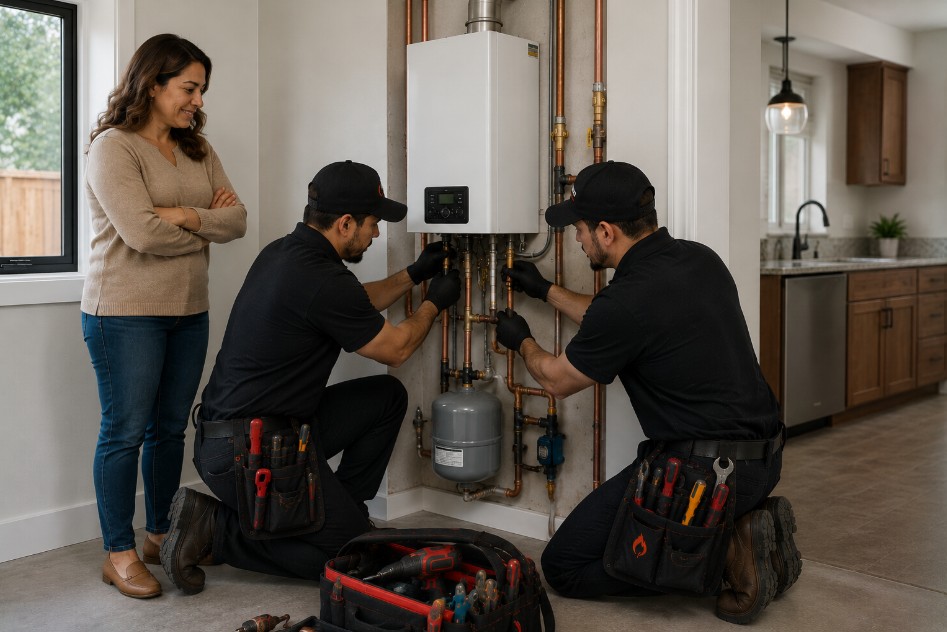
Delano HVAC helps homeowners plan and install boiler heating systems designed for consistent indoor comfort. Whether you are replacing an older boiler or planning a new water-based heating setup, this page focuses on residential boiler installation for homes in Delano, CA.
Boiler Installation in Delano, CA for Reliable Home Heating
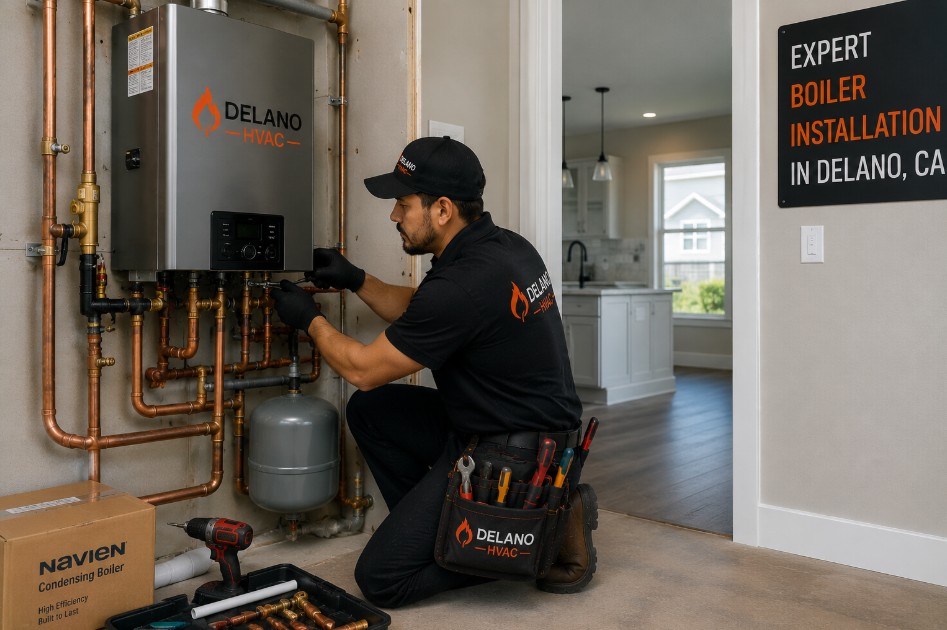
Boiler Installation in Delano is a residential service from Delano HVAC focused on planning and installing new boiler heating systems for homes — whether that means replacing an older boiler that is no longer reliable or setting up a water-based heating system for the first time. This page is specifically for new installation and boiler replacement planning, not boiler repair or general HVAC service.
Boiler installation requires careful planning because the right system depends on several factors specific to the home. Heating demand, home layout, available piping, venting requirements, and fuel type all affect which boiler system makes sense and how the installation should be approached. Sizing a boiler correctly for the space it will serve is one of the most important parts of the process — a system that is too small will struggle to heat the home, and one that is oversized can create comfort and efficiency problems.
Boiler installation is a different scope of work from boiler repair. The goal here is to plan and install a new heating system or replace an aging boiler with a properly sized, correctly configured replacement. Homeowners dealing with an existing boiler that is not performing correctly — rather than planning a new installation — can find information specific to that situation on the Boiler Repair page.
Why Boiler Heating Systems Work Well for Residential Comfort
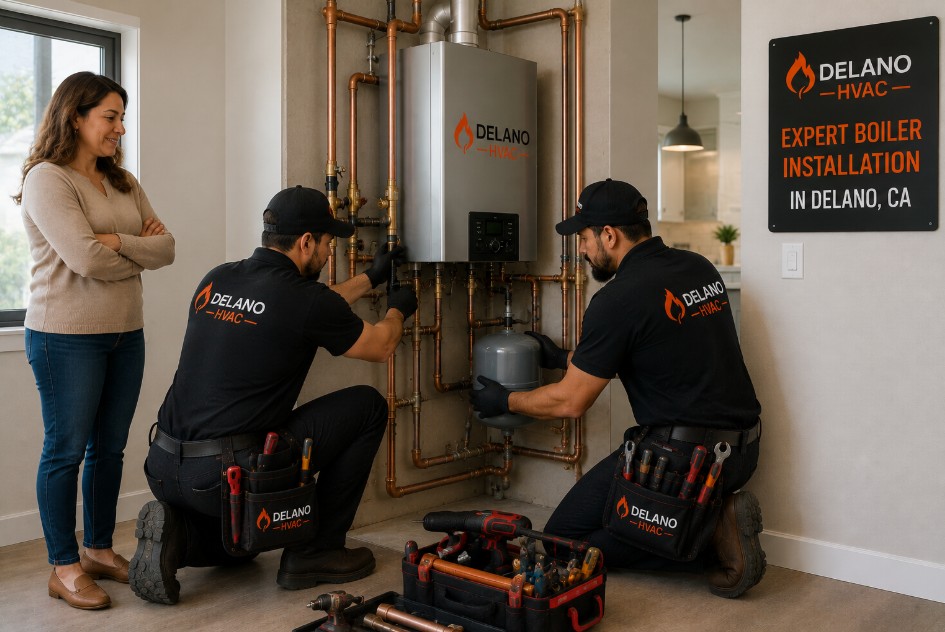
For Delano homes that rely on water-based heating, a properly installed boiler system can provide steady, consistent indoor warmth throughout the heating season. Understanding what makes boiler heating distinctive helps homeowners plan the right installation from the start.
Steady Heating Comfort
Boiler systems are known for producing consistent, even heat that distributes smoothly through radiators or baseboard units. Because there is no forced-air cycling on and off, the indoor temperature tends to hold more steadily between heating calls — which many homeowners notice as a more comfortable heating experience compared to ducted systems.
Water-Based Heating System
Boilers heat water or generate steam that travels through pipes to radiators, baseboards, or radiant systems throughout the home. This approach is fundamentally different from furnace-based forced-air heating, which moves conditioned air through ducts to deliver warmth.
Quiet Heating Operation
Because boiler systems do not move large volumes of air through ductwork, they typically operate with less fan and airflow noise than forced-air systems. The absence of air movement also means no duct-related sound transmission between rooms during a heating cycle.
Good Fit for Existing Hydronic Setups
Homes that were originally built with radiators, baseboard heaters, or other hydronic distribution systems may be well suited for boiler replacement rather than switching to a different heating type entirely. A new boiler can often connect to existing piping and distribution components when the system is properly evaluated and the installation is planned correctly.
Long-Term Heating Performance
Correct sizing, proper installation, and ongoing care are the main factors that support reliable boiler performance over the long term. A boiler that is appropriately matched to the home's heating demand and installed with the right venting and controls is better positioned to deliver consistent heating without repeated service issues.
After installation, routine HVAC Maintenance helps support long-term boiler performance and system reliability throughout the heating season.
Boiler performance depends on correct sizing, proper installation, system condition, and ongoing care — each factor contributes to how consistently the system heats the home.
Signs It May Be Time for a New Boiler System
For Delano homeowners with older boiler systems, the decision to install a new system often comes down to a combination of factors — how often the system has needed repairs, whether heating comfort has declined, and whether the system can still be counted on through a full heating season. If the issue is isolated and the system is still in reasonable condition, homeowners may compare replacement with Boiler Repair before deciding on a direction.
Frequent Boiler Repairs
When a boiler requires repairs on a recurring basis — whether it is the same problem returning or different issues each season — the pattern can be a sign that the system is becoming less dependable overall and may be nearing the end of a practical service life.
Uneven Heating Around the Home
Some rooms noticeably cooler than others during the heating season can indicate the boiler is no longer distributing heat effectively throughout the system — whether from pressure issues, piping problems, or declining output capacity.
Rising Heating Costs
An older boiler that is working harder to maintain the same level of heating comfort may reflect in higher energy bills over time. Declining efficiency is a natural part of aging for most heating systems, and it often becomes more noticeable in the later years of a system's life.
Recurring Leaks or Pressure Issues
Water leaks or pressure problems that keep returning after being addressed can point to internal wear in the boiler or connected piping. Repeated issues in the same area of the system are worth evaluating carefully before committing to another repair.
Noisy Boiler Operation
Banging, rumbling, knocking, or gurgling sounds during boiler operation can be a sign of scale buildup, air in the system, or internal component wear. While some sounds can be addressed with service, persistent or worsening noise in an older system may indicate deeper issues.
Older Boiler Age
As boiler systems age, parts can become harder to source, and the accumulated wear on internal components can make maintaining consistent performance more challenging. Age alone is not always a reason to replace, but it is a factor worth weighing alongside repair history and current performance.
Repair Cost Feels Too High
When a quoted repair cost starts to feel significant relative to the system's age and current condition, many homeowners begin comparing that expense against what a new boiler installation would involve. That comparison is often where the replacement decision becomes clearer.
A new boiler system may be worth considering when repair history, heating comfort, system age, and operating costs all point in the same direction — no single factor on its own is always enough to decide.
Average Boiler Installation Cost in Delano, CA
Boiler installation cost depends on more than the equipment price. A realistic estimate needs to account for the home's heating load, the boiler type and efficiency rating selected, the condition of existing piping, venting requirements, fuel source, and the labor involved in connecting and commissioning the new system. Each of these areas can shift the project scope significantly.
For Delano homeowners, different home sizes, layouts, and heating goals may call for different boiler capacities, controls, or piping configurations. A home with older distribution piping or a layout that requires additional runs will typically involve more planning and installation work than a straightforward boiler-for-boiler replacement. If the project involves a larger heating system upgrade, homeowners may also compare it with broader HVAC System Replacement options.
Typical Boiler Installation Range
Actual cost varies based on boiler type, system size, efficiency rating, piping condition, venting requirements, fuel type, labor, controls, and installation complexity. Pricing is not confirmed until the home and system are reviewed.
Boiler Type
The type of boiler selected — standard efficiency, high-efficiency condensing, combination, or other residential configurations — affects both equipment cost and the installation requirements that come with it.
System Size and Heating Capacity
Larger homes or those with greater heating demand require a boiler sized to match. Correct sizing affects both equipment cost and how the system is integrated with existing piping and distribution.
Efficiency Rating
High-efficiency boiler models typically carry a higher upfront equipment cost than standard units. The efficiency level chosen affects both the initial installation price and the system's long-term heating operating costs.
Piping Condition
Older distribution piping, existing leaks, or sections that need to be rerouted or replaced can add material and labor to the project. A boiler-for-boiler swap in a home with sound piping typically involves less work than a more involved piping update.
Venting Requirements
Different boiler types have different venting configurations. High-efficiency condensing boilers often require new PVC flue piping rather than traditional metal venting, and homes may need venting updates depending on what the new system requires.
Fuel Type
Natural gas, propane, and electric boilers involve different equipment and connection requirements. Fuel type affects equipment selection, what connections or supply lines need to be in place, and whether any fuel-related upgrades are part of the project.
Labor and Installation Complexity
Labor hours depend on access to the mechanical space, how the boiler connects to existing piping and distribution, what commissioning and balancing the system requires, and the overall difficulty of the installation setup.
Old Boiler Removal
When replacing an existing system, the removal and proper disposal of the old boiler is typically part of the project. The size and type of the existing unit can affect how much time and effort removal involves.
Controls and Thermostat Setup
Thermostat compatibility, control upgrades, or zoning adjustments — if needed for the new boiler system — add to the overall project cost. The controls selected also affect how the system is programmed and operated after installation.
Final pricing is best confirmed after reviewing the home's heating needs, boiler type, piping condition, venting requirements, fuel source, and full installation scope — not before the project has been properly assessed.
Our Boiler Installation Process in Delano, CA
Delano HVAC follows a structured boiler installation process to review home heating needs, select and size the right boiler setup, complete the installation and connections, and test the system before it is handed back for daily residential use.
Heating System Review
The home's current heating setup is reviewed first — including the existing boiler condition if applicable, piping layout, radiators or baseboard units, comfort concerns, and how the home has been heated. This review shapes the sizing and planning decisions that follow.
Boiler Sizing and Setup Planning
Before installation begins, the right boiler capacity is determined based on the home's heating load. Fuel type, venting requirements, piping condition, control compatibility, and the connection plan are all considered so the installation is set up correctly from the start.
Boiler Installation and Connection
The new boiler is positioned, connected to the existing or updated piping and distribution system, vented according to the system requirements, and wired for controls. Old boiler removal, if applicable, is handled as part of this phase before the new system is prepared for commissioning.
Testing, Controls, and Heating Check
Once connected, the system is tested for heating output, operating pressure, circulation throughout the distribution system, control and thermostat response, and safe overall operation. The boiler is confirmed to be functioning correctly before the installation is considered complete.
After installation, routine HVAC Maintenance helps support long-term boiler performance and heating reliability through each heating season.
A clear installation process helps ensure the boiler system is properly selected, installed, connected, and tested for reliable home heating before the project is complete.
Boiler Installation vs Boiler Repair: Which Makes More Sense?
For Delano homeowners with an existing boiler, the decision between repair and new installation depends on system age, repair history, heating reliability, recurring pressure or leak issues, and whether ongoing service still makes financial sense. There's no universal answer — the right direction depends on what the system is actually doing.
When Boiler Repair Makes Sense
Repair PathBoiler repair may be the better option when the system still heats reliably and the issue can be corrected without repeated major service needs. If the issue appears isolated, homeowners may compare new installation with Boiler Repair before deciding.
When Boiler Installation May Be Better
Installation PathBoiler installation may make more sense when an older system keeps creating heating comfort issues or when repair costs no longer feel practical relative to what the system is delivering. A clear diagnosis helps make that comparison based on actual system condition.
Why Delano Homeowners Choose Us for Boiler Installation
Installing a new boiler is more than swapping out equipment. It involves understanding how the home is heated, sizing the unit correctly for the space, evaluating the piping and circulation system, confirming venting requirements, and setting up the controls properly. Delano HVAC approaches residential boiler installation with that full picture in mind from the start.
Boiler Installation in Delano, CA — Frequently Asked Questions
Clear answers to questions Delano homeowners ask about residential boiler installation, boiler replacement, and heating comfort planning.
Answered
Boiler installation in Delano, CA commonly ranges from around $4,000 to $12,500+ for residential projects, depending on boiler type, system size, piping condition, venting requirements, fuel type, control upgrades, old system removal, and installation complexity. Standard boiler replacements where the piping and venting are already in good shape typically fall toward the lower portion of that range. Projects that require significant piping work, combustion venting updates, or full system modifications will cost more. Actual pricing is best confirmed after reviewing the home and installation scope.
Boiler installation may be worth considering when the existing system is older and has needed repeated repairs across recent seasons, when leaks or pressure issues keep returning after service, when heating comfort has noticeably declined in parts of the home, or when repair costs are no longer proportionate to what the system is delivering. No single sign makes the case on its own — the combination of system age, repair frequency, and comfort performance together is what makes installation the more practical direction.
Installation time depends on the boiler type, the condition of the existing piping and venting, whether the old system needs to be removed, and how much control or system work is involved. A straightforward replacement — where the piping layout is intact and the venting is compatible — can typically be completed in one to two days. More complex projects that require piping modifications, combustion venting updates, or larger system changes will take longer. The actual timeframe is best discussed once the installation scope is reviewed.
Yes. A boiler heats water and circulates it through the home via pipes to radiators, baseboard units, or radiant floor systems. A furnace heats air and distributes it through ductwork. The two systems are fundamentally different in how they distribute heat throughout the home. Boiler installation applies specifically to homes that use or are planning to use a water-based heating distribution system — not to homes with forced-air duct systems, which are better suited to furnace or heat pump equipment.
A properly sized and installed modern boiler may support better heating performance and efficiency compared to an older system that has been declining in output over time. Current boiler models generally operate at higher efficiency ratings than older equipment. However, actual results depend on the home's specific setup, the distribution system condition, whether the piping and controls are compatible, and how well the installation is completed. Efficiency gains from a new boiler are most consistent when the full system — not just the unit — is addressed during installation.
Yes. Routine maintenance helps keep a boiler operating safely and reliably across heating seasons. Pressure checks, heat exchanger inspection, circulation system review, thermostat calibration, venting condition, and controls are all part of scheduled service that supports consistent heating performance. Even a new boiler benefits from annual service to confirm it's operating within the right parameters and to catch any developing issues before they affect the home's heating. Homeowners can review HVAC Maintenance for more information on scheduled service options.
Ready for Boiler Installation in Delano, CA?
Delano HVAC helps homeowners plan and complete boiler installation for reliable water-based heating — whether you're replacing an older boiler or setting up a new residential heating system. Submit a request and we'll be in touch about your home.