
Emergency Boiler Repair in Delano, CA
Restore Heat and Pressure When Your Boiler Stops Working
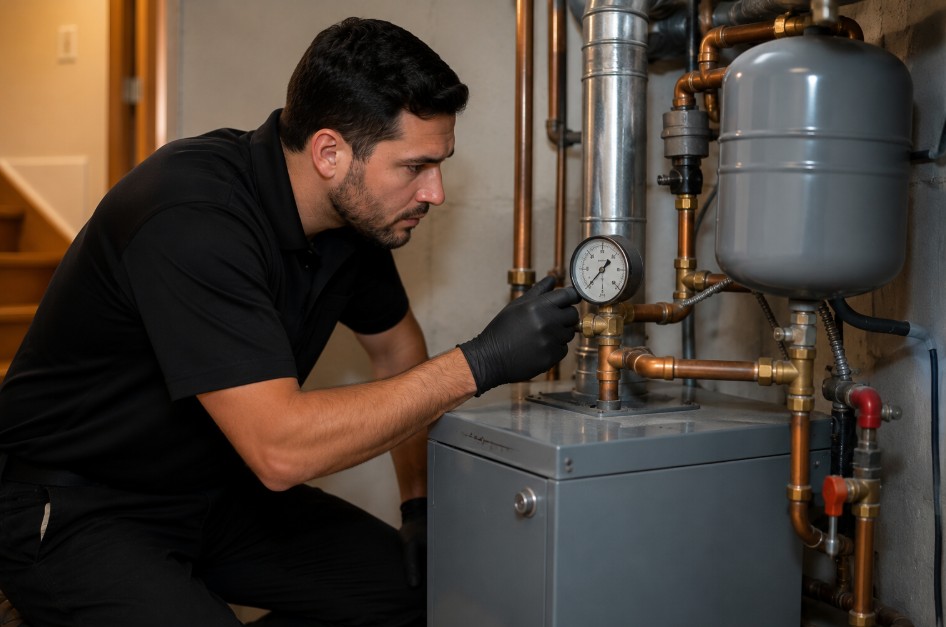
A boiler that's lost pressure, won't reset, or has stopped producing heat altogether doesn't leave much room to wait for a scheduled slot. Delano HVAC responds the same day, checking the actual fault on gas and electric residential boilers before recommending any repair.
When Your Boiler Stops Cooperating
What to Expect From Emergency Boiler Service
- A technician dispatched to diagnose, not just assess
- Common boiler parts carried on the truck
- Clear pricing explained before repair starts
- Residential boiler service in Delano, CA only
- Same-day response for gas and electric systems
Related Services
Warning Signs at the Gauge and the Radiators
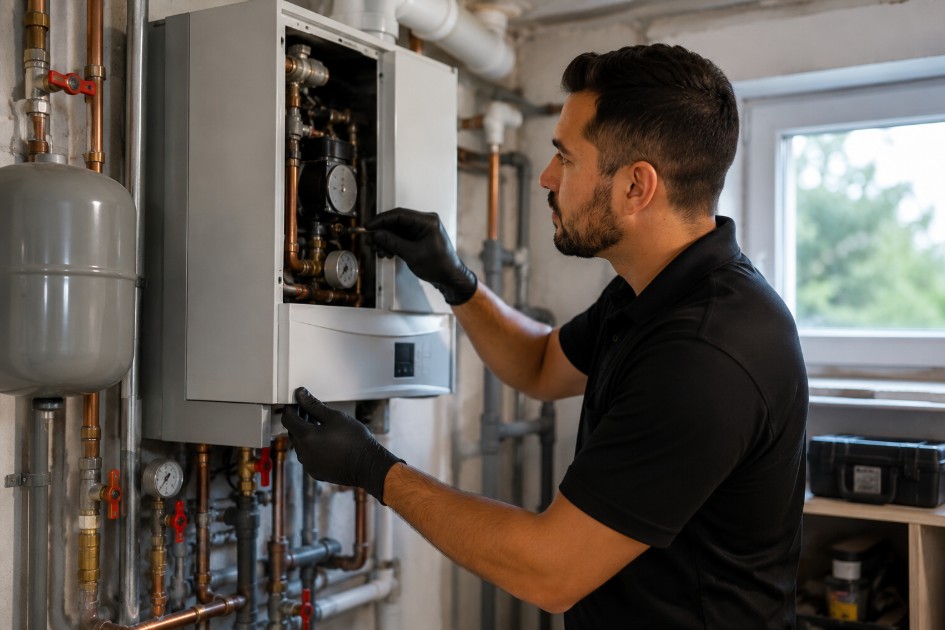
If your boiler is doing any of the following, it's worth a same-day look rather than waiting to see if it settles down.
Pressure Gauge Reading Low
A gauge sitting below the normal range usually means water is leaving the system somewhere, or air has gotten in. It rarely fixes itself by waiting.
No Heat At All
Radiators stay cold and the system doesn't respond to the thermostat. This is treated as a same-day call, especially overnight.
Banging, Whistling, or Gurgling
Often called kettling, these sounds usually mean mineral buildup or trapped air restricting flow inside the system.
Water Leaking From the Unit
Any leak, however small, points to a seal, valve, or pressure issue that tends to get worse rather than resolve on its own.
Boiler Won't Reset
If the reset button doesn't bring the system back, or it fires briefly and locks out again, something is tripping a safety control repeatedly.
Some Radiators Cold, Others Fine
Uneven heating across the house often points to trapped air, a stuck valve, or sludge restricting flow to specific areas.
Circulator Pump Not Running
If the pump isn't moving water through the system, heat can't reach the radiators even if the boiler itself is firing normally.
Thermostat Not Responding
A blank or unresponsive thermostat can look exactly like a dead boiler. Before assuming a system failure, the thermostat needs to be ruled out first.
Condensate Pipe Frozen or Blocked
On condensing boilers, a blocked or frozen condensate line is one of the most common reasons a system locks out during cold weather, even though the boiler itself is otherwise fine.
Fault Code Displayed & Won't Clear
Modern boilers show a numbered or lettered fault code when a safety control trips. If clearing it and restarting brings the same code back, that's a real fault, not a glitch.
Gas Smell, CO Alarm, or Repeated Breaker Trips
If you smell gas near the boiler, a carbon monoxide alarm sounds, or a breaker trips more than once after being reset, leave the property and call 911 before contacting anyone else. Once the property is confirmed safe, we handle the required inspection and shutdown.
No Heat, No Hot Water, or Both? Why It Matters
On systems where the boiler handles both space heating and hot water, which one you've actually lost narrows down the cause fast — before a technician even arrives.
No Heat, Hot Water Still Works
The boiler is clearly firing and heating water, so the issue is usually isolated to the heating side — a zone valve, circulator pump, or heating-specific control.
No Hot Water, Heat Still Works
This points toward something specific to the hot water side of the system — often the diverter valve that directs the boiler's output — rather than the boiler failing outright.
Neither Heat Nor Hot Water
This usually means the boiler itself isn't firing at all — ignition, gas supply, pressure, or a full safety lockout are the first things checked.
What's Failing Inside the Boiler
The symptom at the radiator or the gauge doesn't always match the part that's actually failed. Here's what's typically behind the issues above.
Pressure Loss or a Leak
A gradual pressure drop usually means water is escaping somewhere in the system, even if there's no visible puddle yet. Finding where it's leaving is the first step.
Ignition or Pilot Failure
On gas boilers, a failed ignitor, pilot assembly, or flame sensor prevents the burner from lighting, which shows up as no heat at all.
Circulator Pump Failure
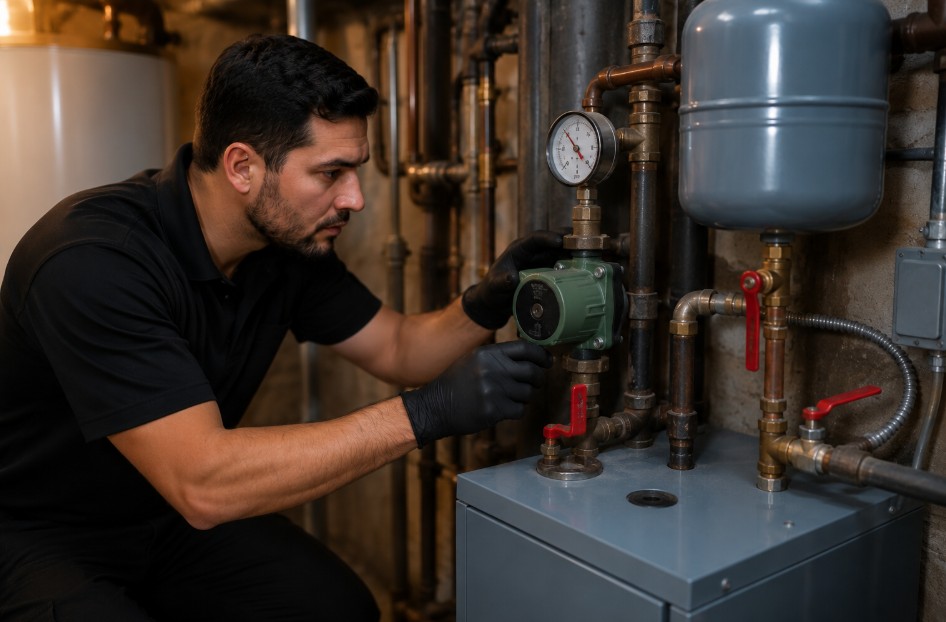
This pump moves hot water to the radiators. When it seizes or fails electrically, the boiler can fire normally while the house still stays cold.
Expansion Tank Issues
This tank absorbs pressure changes as water heats and cools. A failing one causes system pressure to climb or drop in ways that don't make sense at the gauge.
Sludge or Mineral Buildup
Buildup inside the system restricts flow, causes kettling noises, and often shows up as uneven heating across different radiators.
Control Board or Sensor Fault
A failing control board can cause the system to lock out repeatedly, misread pressure, or fail to respond to the thermostat at all.
Zone Valve Problems
On systems with multiple heating zones, a stuck zone valve can leave part of the house without heat while the rest of the system runs fine.
Diverter Valve Failure New
On combi-style boilers, this valve decides whether output goes to the radiators or the hot water tap. A stuck diverter valve is one of the most common reasons a boiler heats fine but hot water doesn't, or the reverse.
Frozen or Blocked Condensate New
The pipe that carries condensation away from the boiler can freeze in cold snaps or clog with sludge over time, which trips a safety lockout even though nothing else on the boiler has actually failed.
Before You Pick Up the Phone
A few checks take less than a minute and can rule out a simple cause before anything else.
-
1Look at the pressure gauge and note whether it's reading low, normal, or high
-
2Check whether the breaker feeding the system has tripped
-
3Confirm the thermostat is set to heat and calling for warmth
-
4Try the reset button once — if it locks out again quickly, stop resetting it
-
5Check for any visible water near the base of the unit, and check the condensate pipe outside for ice if temperatures have dropped
If you smell gas, a CO alarm is sounding, or the reset locks out repeatedly, stop troubleshooting and request service instead.
How the Repair Actually Happens
Every emergency boiler call follows the same order — understand the problem, inspect the system, confirm the cause, then repair it.
Service Request
You describe what the boiler is doing — pressure, noise, a lockout, no heat, or no hot water. That detail shapes what's checked first.
Technician Dispatched
A technician arrives with diagnostic tools and the parts most boiler emergencies need, so a same-visit repair is possible whenever the part is on hand.
Diagnosis Before Repair
The system is inspected — pressure, ignition, circulator pump, controls, and any zone or diverter valves — and the actual cause is confirmed before repair is proposed.
Repair & Full Test
Once addressed, the system is run through a full heating cycle to confirm pressure holds, heat reaches every radiator, and the boiler responds correctly to the thermostat.
For broader heating and cooling emergencies beyond boiler-specific issues, Emergency HVAC Services covers the full range of urgent system failures.
How Urgent Is It, Really?
Not every boiler issue needs a same-day call. Here's the difference between a true emergency and something that can be scheduled.
Needs a Same-Day Response
- ✕ No heat, no hot water, or both, without warning
- ✕ Pressure that keeps dropping or won't hold
- ✕ Boiler locking out repeatedly after reset
- ✕ Gas smell, CO alarm, or a breaker tripping repeatedly
- ✕ Water leaking from the unit
Can Be Scheduled
- – One radiator slightly cooler than the rest
- – A faint noise that isn't getting worse
- – Pressure that's slightly low but stable
- – Energy bills climbing without a clear cause
Is the Boiler Worth Repairing?
An emergency call is about getting heat back today. But when a boiler is older or has needed a few too many visits, it's worth knowing where the line is before money goes into a repair.
✓ Repair Usually Makes Sense
- The boiler is under 12 to 15 years old
- This is the first major repair it's needed
- The failed part is isolated — a pump, valve, or sensor, not the heat exchanger
- The repair cost is well under half of what a new installed system would cost
- The system held pressure and ran normally before this failure
↻ Replacement Becomes the Better Math
- The boiler is pushing 15 to 20+ years old
- This is the second or third significant repair within a couple of years
- The heat exchanger itself is involved, not just a supporting part
- The repair cost is approaching half of a new system's installed price
- Parts are becoming harder or slower to source for the model
What You'll Actually Pay for Boiler Repair in Delano
What a boiler repair costs depends on which part failed and how much of the system is affected. The range and table below reflect that variation — neither is a quote.
Pressure and minor component repairs sit at the lower end. Circulator pump, expansion tank, or heat exchanger issues can push costs toward the higher end or beyond it.
What Affects the Final Cost:
Type of Failure
A pressure or sensor issue is a smaller repair than a circulator pump, expansion tank, or heat exchanger problem, and the actual fault drives the cost more than the initial symptom.
Parts Required
Ignitors, zone valves, expansion tanks, and control boards are priced differently, and part availability can affect whether a repair finishes the same visit.
System Age and Condition
Older boilers sometimes reveal a second developing issue once the first is inspected, and parts can take longer to source as a system ages.
Fuel Type
Gas and electric boilers involve different components and safety checks, which can affect both diagnostic time and repair scope.
Access to the Unit
A boiler in a tight utility closet or a difficult mechanical space can take longer to service than one with open access.
Typical Repair Costs by Component
| Component | What Usually Goes Wrong | Typical Cost Range |
|---|---|---|
| Ignitor or Pilot Assembly | Won't light, or lights and drops out | $150 – $350 |
| Circulator Pump | Seized, noisy, or not moving water | $300 – $700 |
| Expansion Tank | Waterlogged or losing its air charge | $200 – $600 |
| Zone Valve | Stuck open or closed, one zone affected | $200 – $500 |
| Diverter Valve | Heat or hot water, but not both | $250 – $600 |
| Control Board | Repeated lockouts, display faults | $300 – $700 |
| Heat Exchanger | Leaking or cracked — often a repair-vs-replace decision | $800 – $1,800+ |
Why Homeowners Choose Us?
A boiler emergency is stressful enough without also wondering whether the diagnosis is right. Here's how every boiler call is handled.
Residential Boiler Focus
Every emergency call is for a home system, gas or electric, not commercial boiler equipment.
Diagnosis Before Repair
A no-heat call can trace back to pressure, ignition, a pump, or a control fault. The actual cause is confirmed before anything is recommended.
Straightforward Communication
You're told what was found, what it means, and what the repair involves, before anything is decided.
Equipped for Same-Visit Repairs
Technicians carry the parts most boiler emergencies actually need, so a diagnosis doesn't automatically mean a second appointment.
A Clean, Organized Visit
The goal is a visit that's easy to follow start to finish, with a tidy work area and no surprises on the invoice.
Frequently Asked Questions
Contact Us for Emergency Boiler Repair in Delano, CA
Delano HVAC helps homeowners get heat and hot water back when a boiler loses pressure, locks out, or stops working altogether. Reach out to us with what's happening, and we'll get a technician headed your way.
