
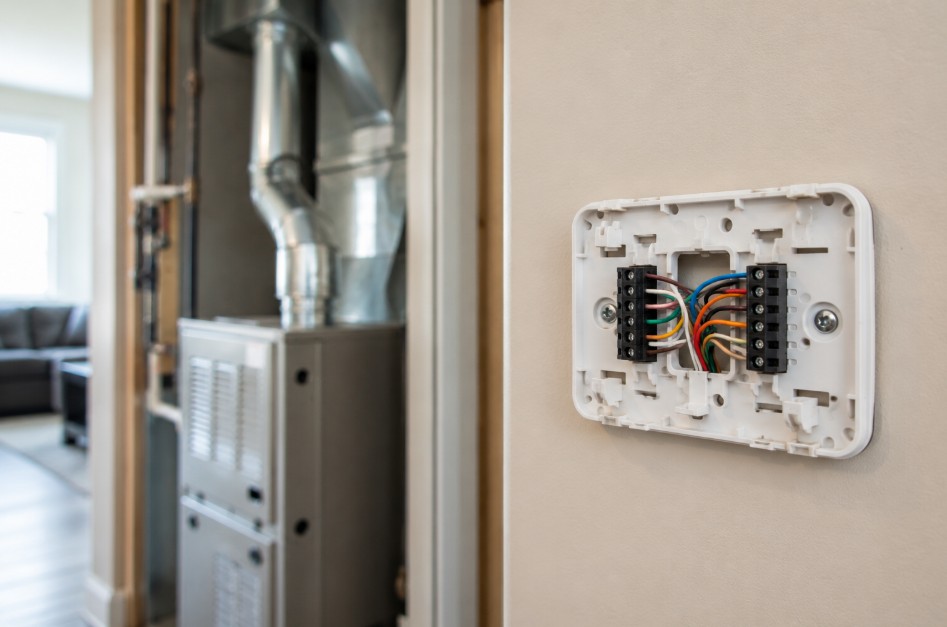
Emergency Thermostat Repair in Delano, CA
Get Control of Your System Back the Same Day
A blank screen, a thermostat that won't respond to any setting, or a system that ignores it completely — any of these can leave a home without heating or cooling even though the actual HVAC equipment might be fine. Delano HVAC checks both sides, the thermostat and the system behind it, before recommending any repair.
When a Thermostat Stops Making Sense
A dead screen is the easy case. It's the thermostat that looks completely normal — lit up, responsive, set correctly — while the furnace or AC never turns on, that leaves most homeowners stuck deciding who to call.
A thermostat sits between the homeowner and every other piece of HVAC equipment in the house, which means a single failure here can look like a furnace problem, an AC problem, or a heat pump problem, depending on what it's supposedly controlling that day. Some thermostats go fully blank. Others stay lit but stop sending a signal anywhere. Some display a temperature that's clearly wrong. A few just reset themselves at random and lose their program.
A thermostat that's a degree or two off, or a smart model that occasionally drops Wi-Fi and reconnects on its own, is a different situation than one that's stopped communicating with the system entirely. The gradual version is worth mentioning at a regular visit — the sudden version isn't something to leave alone overnight.
Most thermostat failures trace back to power getting cut somewhere along the line — dead batteries, a tripped breaker, a blown fuse on the equipment's control board, or wiring that's come loose. A smaller share are wiring or compatibility issues that show up after a new system gets installed and the old thermostat gets reused. Either way, the fix usually starts at the wires, not the screen.
What Happens When You Reach Out
- A technician dispatched to test the thermostat and the equipment behind it
- Common thermostats and wiring parts carried on the truck
- Clear pricing explained before repair starts
- Residential thermostat service in Delano, CA only
- Same-day response for basic, programmable, and smart models
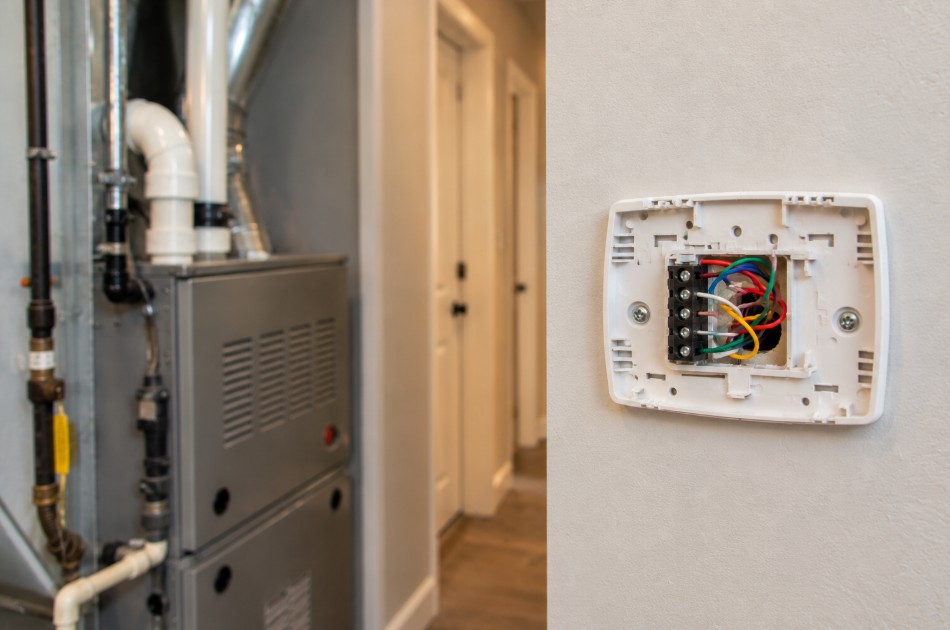
What a Failing Thermostat Actually Looks Like
If your thermostat matches one of these, it's worth a same-day look rather than swapping batteries a second and third time.
Blank or Frozen Screen
No display, no backlight, no response to touch. This is the most common thermostat call and often the fastest to resolve.
Unresponsive to Any Setting
The screen is lit and looks normal, but changing the temperature or mode does nothing at the equipment.
Displays the Wrong Temperature
The reading doesn't match how the room actually feels, and it's been drifting rather than just off by accident.
Equipment Doesn't Respond, Thermostat Looks Fine
The display shows a call for heat or cooling, but the furnace, AC, or heat pump never starts.
System Short-Cycles After a Setting Change
Turning the temperature up or down causes the system to start and stop repeatedly instead of running a normal cycle.
Screen Resets or Loses Its Program
The thermostat reboots on its own, loses saved settings, or reverts to a default screen without anyone touching it.
Smart Thermostat Won't Connect
A Wi-Fi-enabled model that won't join the network, won't respond to the app, or shows an offline status that doesn't clear.
Batteries Drain Unusually Fast
New batteries dying within days, rather than months, points to a power draw issue beyond a simple low-battery warning.
Breaker Trips When You Adjust the Thermostat
If changing the thermostat setting causes a breaker to trip, or there's a burning smell near the furnace, air handler, or any HVAC equipment, that's beyond a simple thermostat fix. Turn the system off and request service rather than continuing to test it.
Is It the Thermostat, or the System Behind It?
Because a thermostat controls equipment it doesn't actually contain, the same complaint — "nothing's happening" — can point to two completely different problems.
Likely the Thermostat
The screen is blank, unresponsive, or showing an obviously wrong reading, while the breaker hasn't tripped and nothing else about the system has changed. That points to the thermostat, its wiring, or its power source.
Likely the System Itself
The thermostat display looks completely normal — correct time, correct temperature, responds to touch — but the equipment never turns on. That points away from the thermostat and toward the furnace, AC, or heat pump.
Genuinely Hard to Tell
The thermostat shows a call for heat or cooling, but nothing happens anywhere. This is the scenario that actually needs a voltage test at the wires to know which side of the system the fault is on.
Whichever it turns out to be, the visit starts the same way — testing both sides before deciding where the repair happens.
What's Behind the Blank Screen
The symptom on the display and the actual cause usually aren't the same thing. Here's what's typically behind the issues above.
Dead or Weak Batteries
Even hardwired thermostats often use batteries as backup power, and a weak set is the single most common reason for a blank or flickering screen.
Tripped Breaker or Blown Fuse
The low-voltage circuit that powers the thermostat runs through a small fuse on the equipment's control board. A short elsewhere can blow that fuse and kill the display entirely.
Loose or Miswired Connections
Thermostat wires are thin and can work loose over time, especially after a wall gets painted or the unit gets bumped during cleaning.
Missing or Failing C-Wire
Systems without a dedicated common wire rely on borrowing power from the equipment itself, which can cause a screen that dims, reboots, or dies after a cycle.
Failed Internal Sensor
A sensor reading temperature incorrectly can cause the system to run at the wrong times or not at all, even with otherwise normal wiring.
Wi-Fi or App Connectivity Fault
Smart thermostats depend on a stable network connection, and a firmware issue or dropped connection can make the unit unreachable even though it's still functioning locally.
Incompatibility With the Equipment
A thermostat carried over from an older system, or installed without checking compatibility, can behave erratically even when it's brand new.
Two Minutes Before You Call
A couple of checks take less time than waiting on hold, and either one can be the whole problem.
Replace the batteries, even if the low-battery icon hasn't shown up yet
Check the breaker feeding the furnace or air handler, not just the thermostat itself
Confirm the thermostat is set to the correct mode — heat, cool, or auto
For smart thermostats, check whether other devices on the same Wi-Fi network are also having trouble
Note whether the screen went blank suddenly or was flickering beforehand
Safety Note: If a breaker trips again right after being reset, or there's a burning smell near the equipment, stop testing it and request service instead.
What Happens When You Reach Out
Every thermostat call follows the same order — hear what's happening, test both sides of the system, confirm the cause, then fix it.
Service Request
You describe what the thermostat is doing — blank, unresponsive, wrong readings, or a system that ignores it. That shapes what gets tested first.
Technician Dispatched
A technician arrives with the tools and common parts needed to test wiring, voltage, and the equipment itself, not just the thermostat.
Testing Both Sides
Power, wiring, and voltage are checked at the thermostat, and the equipment is checked separately, so the actual fault is confirmed rather than assumed.
Repair & Full System Check
Once the cause is addressed, the system is run through a full cycle to confirm the thermostat and the equipment are communicating correctly.
For broader heating and cooling emergencies beyond thermostat-specific issues, Emergency HVAC Services covers the full range of urgent system failures.
Same-Day or Can It Wait?
Not every thermostat quirk needs a same-day call. Here's the difference between a real emergency and something that can be scheduled.
Needs a Same-Day Look
- ✕ Blank or unresponsive screen with no HVAC output
- ✕ Equipment doesn't respond at all to any setting
- ✕ Breaker trips when the thermostat is adjusted
- ✕ System short-cycles every time settings change
- ✕ Screen resets or loses its program repeatedly
These leave a home without reliable heating or cooling right away.
Can Be Scheduled
- – Temperature reading that's off by a degree or two
- – Smart thermostat that drops Wi-Fi occasionally but reconnects
- – Slightly delayed response between a setting change and the system starting
- – Battery warning that hasn't caused any other symptom yet
These are worth fixing, but they don't need to interrupt your day. Our HVAC Maintenance visits catch this kind of drift during a regular check.
What Thermostat Repair
Costs in Delano, CA
Costs vary depending on whether the fix is at the thermostat, the wiring, or the equipment's control board. The range below reflects that — it isn't a quote.
Battery, fuse, and simple wiring fixes sit at the lower end. A missing C-wire, a failed sensor, or a full replacement push toward the higher end.
What Affects the Final Cost
Type of Issue
A blown fuse or a loose wire is a shorter repair than adding a C-wire or replacing a failed internal sensor. The diagnosis determines the work scope before any price is confirmed.
Thermostat Model
Basic and programmable thermostats are generally less expensive to repair or replace than Wi-Fi-enabled smart models, which carry higher part costs and longer configuration time.
Existing Wiring
Homes without a common wire may need one run to the equipment — labor beyond the thermostat itself. Older wiring that's brittle or improperly grounded can add time to any diagnosis.
Compatibility With the System
A thermostat that isn't matched to the equipment it's controlling sometimes needs replacement regardless of what's wrong with it — particularly after a system upgrade that left an older stat in place.
Equipment Access
Checking a fuse or tracing wiring at the furnace or air handler takes longer when that equipment is in a tight attic, crawlspace, or closet installation.
A confirmed price comes after both the thermostat and the wiring behind it are checked. If the unit itself has failed, replacement is usually a straightforward same-visit fix — not an extended repair.
Why Choose Us
A thermostat problem is easy to misdiagnose from the couch. Here's how every call gets handled instead.
Residential Focus
Every call is for a home thermostat and the equipment it controls, not commercial control systems.
Tests Both Sides, Not Just the Thermostat
A dead screen or unresponsive system gets checked at the wiring and the equipment, not just swapped for a new unit by default.
Straightforward Communication
You're told what was found, what it means, and what the repair involves, before anything is decided.
Equipped for Same-Visit Repairs
Common thermostats, wiring parts, and fuses are carried on the truck, so a diagnosis doesn't automatically mean a second appointment.
A Clean, Organized Visit
The goal is a visit that's easy to follow start to finish, with a tidy work area and no surprises on the invoice.
Common Questions,
Direct Answers
Answers to the questions that come up after reading this page — not generic thermostat trivia.
-
Sustained high ambient temperatures and heavy cycling wear on thermostat components faster than in milder climates — especially when the unit sits on a sun-exposed wall or in a space that runs hotter than the room it's reading. A thermostat that starts acting up mid-summer in a home that runs the AC all day isn't necessarily defective; it may be positioned poorly, or it may have simply reached the end of its useful life earlier than expected under those conditions.
-
A new thermostat doesn't guarantee compatibility with the system behind it. If the existing wiring doesn't include a C-wire (common wire), many modern thermostats won't receive the steady 24V power they need and will behave erratically or go blank. Heat pump systems add another layer — if the O/B wire controlling the reversing valve isn't configured correctly for the specific unit, the thermostat may call for heat and deliver cooling, or produce nothing at all. New thermostat, wrong setup, same problem.
-
Aux Heat kicks in automatically when a heat pump can't meet the demand on its own — it switches to backup electric resistance strips. Em Heat bypasses the heat pump entirely and runs only those strips, which costs significantly more to operate. Neither is an emergency on its own, but if Aux Heat runs constantly during mild temperatures, or Em Heat is active and you didn't turn it on, the thermostat's configuration or the heat pump itself should be checked. Neither should be a default running state.
-
Yes — and this is one of the most common misdiagnoses. The thermostat typically draws low-voltage power through the same circuit that feeds the control board. A blown 3- or 5-amp fuse on that board cuts power to the thermostat entirely, leaving a blank screen that looks like a dead thermostat. The fix is a fuse at the unit, not anything at the wall. Fuses don't blow on their own, so the follow-up question is always what caused it — a wiring short, a grounded wire at the thermostat base, or a fault on the board itself.
-
In older mechanical thermostats, heavy particulate buildup on internal sensors can cause temperature readings to drift or respond slowly. In modern digital units, sensor contamination is less common, but dust affects the equipment the thermostat controls — blower motors, flame sensors, limit switches — more than the thermostat itself. Homes near agricultural operations in the Delano area tend to see this faster than urban homes, particularly on units that aren't well sealed against the wall.
-
If the thermostat is over 10 years old and the fix involves internal components, replacement is usually cheaper and more reliable — parts for older models become hard to source. The clearer cases for replacement are a cracked or internally damaged display, a control board fault inside the thermostat itself, or a unit that isn't compatible with equipment installed after it. If the problem is a bad wire connection, a loose terminal, or a blown fuse at the air handler, repair is almost always the right call over an automatic swap.
-
Most wiring issues, blown fuses, bad connections, and straightforward unit swaps resolve in one to two hours on the same visit. The longer cases are when the fault traces into the equipment rather than the thermostat itself — accessing a control board inside a closet-mounted furnace or a tight attic installation adds time. C-wire installation and smart thermostat configuration run longer than a basic swap but are still typically same-visit work.
Still have a question?
A technician can walk you through it before the visit.